Thursday, April 18, 2024

The Boss Katana: Unleashing the Ultimate Sound Experience for Musicians.

 The Boss Katana: Unleashing the Ultimate Sound Experience for Musicians.


Introduction


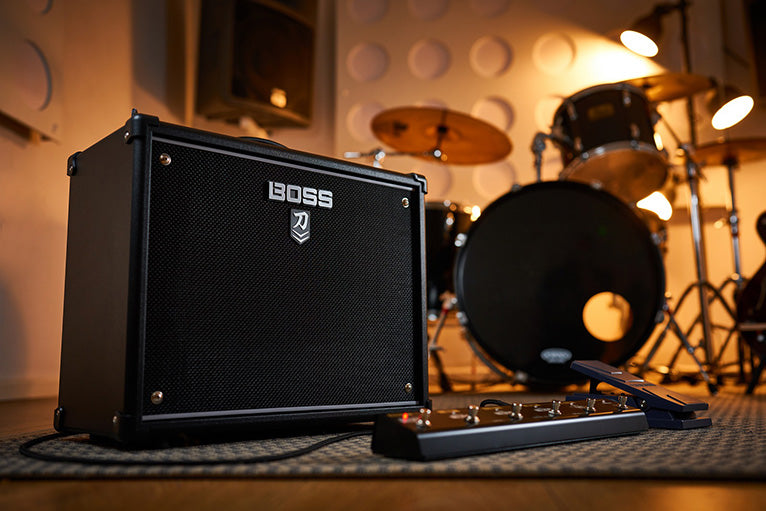
In the world of guitar amplifiers, the Boss Katana series stands out as a beacon of innovation, versatility, and quality. It's no wonder that guitarists from all walks of life are drawn to the Katana's charm, making it a top choice for both beginners and seasoned professionals. This comprehensive exploration will delve into the myriad of reasons why the Boss Katana is considered the best amp for most everyone.

The Genesis of Greatness


The Boss Katana series was born out of a simple yet profound mission: to create an amplifier that provides a wide array of tones, caters to various playing styles, and maintains affordability without compromising on quality. Boss, a subsidiary of the Roland Corporation, has been a pioneer in the music equipment industry for decades, and the Katana series is a testament to their commitment to excellence. Even as I was writing this, boss has released a pocket Amp, and a 500 Watt Bass head. (Katana Go and KTN500B)


Sound Quality and Versatility


At the heart of the Katana's appeal is its exceptional sound quality. The amps are equipped with custom-designed speakers and advanced circuitry that produce a rich, full-bodied tone. Whether you're looking for the warm, clean sounds of classic jazz or the aggressive growl of heavy metal, the Katana delivers with precision.


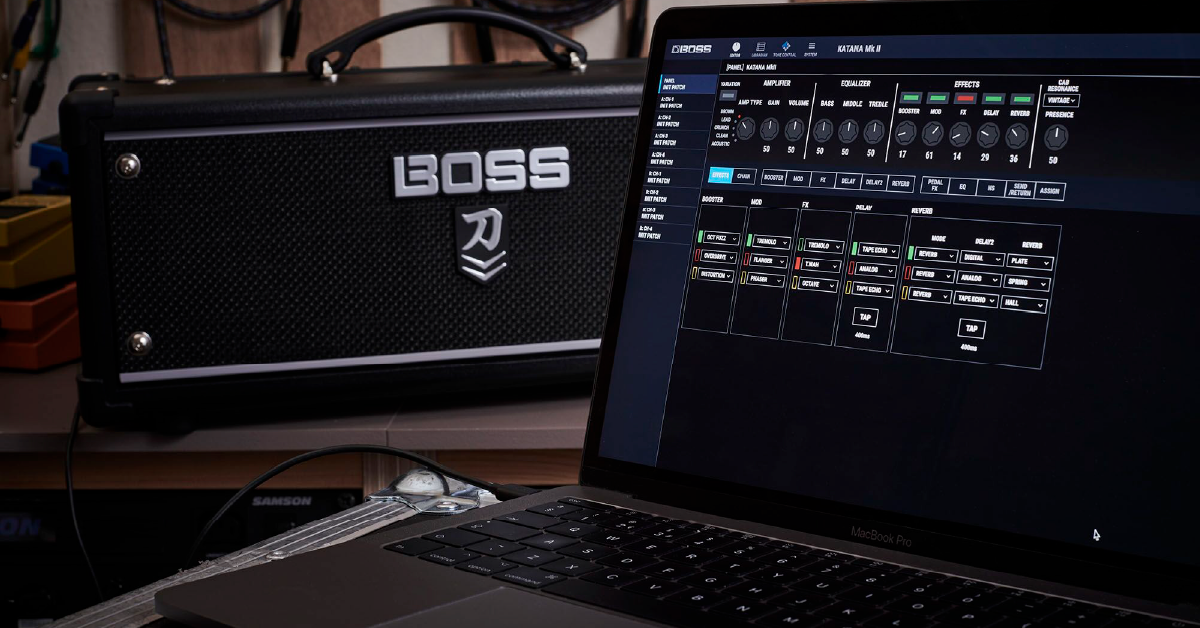
The series boasts multiple amp models and effects, all meticulously crafted to emulate the characteristics of vintage amplifiers and famous stompboxes. The versatility doesn't end there; with the built-in Tone Studio software, users can tweak and customize their sound to an astonishing degree, creating personalized presets that can be stored and recalled with ease.


User-Friendly Interface


Despite its vast capabilities, the Boss Katana is remarkably user-friendly. The intuitive control panel allows guitarists to adjust settings quickly, making it an ideal choice for those who prefer a plug-and-play experience. The amp's straightforward design ensures that even those new to the world of electric guitar can achieve their desired sound without a steep learning curve.

Durability and Portability


Boss is renowned for building sturdy, road-worthy equipment, and the Katana series is no exception. Constructed with durability in mind, these amps can withstand the rigors of touring and frequent transport. Additionally, the Katana's lightweight design makes it a breeze to carry from gig to gig, ensuring that your sound is always with you, no matter where your music takes you.


Community and Support


The Katana series benefits from a vibrant community of users who share tips, presets, and advice. This sense of camaraderie not only enhances the user experience but also fosters a collaborative environment where guitarists can grow and learn from one another. Moreover, Boss provides exceptional customer support, offering firmware updates that continually improve the functionality and feature set of the amps.


Conclusion


The Boss Katana series represents a paradigm shift in the world of guitar amplification. Its combination of sound quality, versatility, user-friendliness, durability, and community support culminates in an amp that truly stands out from the crowd. For guitarists seeking an amplifier that can adapt to any genre, provide endless tonal possibilities, and support their musical journey, the Boss Katana is, without a doubt, the best choice for most everyone.
Embrace the power, embrace the versatility, embrace the community—embrace the Boss Katana, and let your musical expression know no bounds. Whether you're practicing at home, recording in the studio, or performing on stage, the Katana will be your trusted companion, ready to unleash the ultimate sound experience. So plug in, turn up, and let the Boss Katana carry your music to new heights.


Saturday, April 6, 2024

So You Wanna Be a Rockstar? A Definitive Guide to Getting into the World of Guitar

So You Wanna Be a Rockstar? A Definitive Guide to Getting into the World of Guitar


If you have ever dreamed of rocking on stage Infront of thousands of jumping fans, like your favorite Guitar Hero, you are not alone. Many people share this passion, but few actually pursue it, and even fewer are successful. Why? Because they think it's too hard, too expensive, or too late to start. But the truth is, anyone can learn to play guitar, no matter their age, budget, or skill level. All it takes is some dedication, motivation, and guidance. 
In this blog series, I will share with you some tips on how to get started on your guitar journey, from finding the right gear, to practicing effectively, to setting goals, and making progress. Whether you want to play for fun, for friends, or for fame, this guide will help you achieve your musical dreams.

Finding the Right Gear:


The first step to becoming a rockstar is to get yourself a guitar. But not just any guitar. You need a guitar that suits your style, your budget, and your goals. Here are some things to consider when choosing a guitar:


- Electric or acoustic?

 Electric guitars are easier to play than acoustic guitars, because they have thinner strings and lower action (the distance between the strings and the fretboard). They also allow you to use effects pedals and amplifiers to create different sounds and tones. However, electric guitars are more expensive than acoustic guitars, and they require additional equipment such as cables, amps, and sometimes batteries. Acoustic guitars are cheaper and simpler to use than electric guitars, because they don't need any extra gear. They also produce a natural and warm sound that is great for playing folk, country, or blues. However, acoustic guitars are harder to play than electric guitars, because they have thicker strings and higher action. They also limit your sonic possibilities compared to electric guitars. It's worth considering you can play an Electric guitar Acoustically, you can't play most Acoustic guitars through an amp.


- Size and shape?

 Guitars come in different sizes and shapes, depending on the body style, the neck length, and the scale length (the distance between the nut and the bridge). You need a guitar that fits your body and your hands comfortably, so that you can play without strain or pain. Generally speaking, smaller guitars are easier to play than larger guitars, because they have shorter necks and scales. However, smaller acoustic guitars also have less volume and resonance than larger guitars. Larger guitars are louder and richer sounding than smaller guitars, but they also require more strength and reach to play. The best way to find the right size and shape for you is to try out different guitars at a music store or online. A good starting point for electric would be the standard 4 Les Paul, Stratocaster, SG, and Telecaster styles. Also feel around within the sub models, a 50s Les Paul neck feels fatter than a 60's, The Rosewood Tele is going to feel deferent than the Maple, there is no one right Answer, but there are a ton of wrong Answers.


- Quality and price? 

Guitars vary in quality and price depending on the materials, the craftsmanship, and the brand. You need a guitar that is well-made and durable, so that it can withstand years of use and abuse. You also need a guitar that sounds good and plays well, so that it can inspire you and motivate you to practice, trust me, you won't want to pickup that $100 Strat copy after a couple months of wear and tear, However, you don't need to spend a fortune on a guitar to get started. There are many affordable options available that offer decent quality and performance for beginners. The most important thing is to find a guitar that you like and that you can afford. As a pure blanket figure, between $300-600 on the new market, should get you into something comfortable and sustainable.


- Accessories? 

Besides the guitar itself, you will also need some accessories to complete your setup. Assuming you have an electric these include:


  - A strap: 

A strap allows you to play standing up or sitting down comfortably. It also helps you balance the weight of the guitar on your shoulders and prevents it from slipping or falling. For heavy guitars and basses, you want a thick leather strap, for some acoustics, you may need a special strap to connect to your head stock. If you have the extra budget and you have a nicer guitar (Say $500+) a set of strap locks would be a great investment to ensure the security of your guitar, a drop could be fatal from standing height. 


  - A pick: 

A pick is a small piece of plastic or metal that you hold between your thumb and index finger to pluck or strum the strings. Picks come in different shapes, sizes, and thicknesses depending on your preference and style. I recommend grabbing a hand full from your local shop and trying them out, I like Dunlop Jazz 3 .88mm Tortex, but EVERYONE has varied styles and preferences. Don't overthink it, if you're lost, get a combo pack or something in the middle of heavy and light.


  - A tuner: 

A tuner is a device that helps you tune your guitar accurately and easily. Tuners can be clip-on (attached to the headstock of the guitar), pedal (connected to an amplifier), or app (downloaded on your phone or tablet).


  - A case: 

A case protects your guitar from dust, dirt, moisture, and damage when you are not playing it or when you are transporting it. Cases can be hard (made of wood or metal) or soft (made of fabric or leather). This is recommended when you have pets, kids, or don't have the ability to wall hang your instrument. 


-An Amp: 

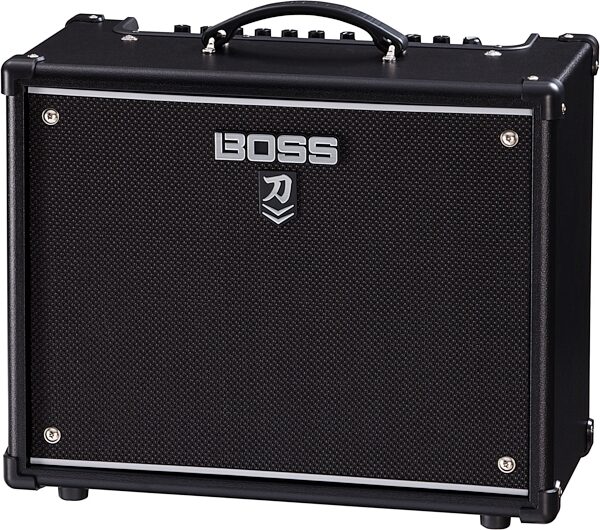
If you have an electric guitar, you need an amp, or at least you're going to want one! For just about every style, as well as the person who doesn't know what they want yet, i have one suggesting I'm confident in. The BOSS Katana! Back to back award winner, and possibly the best selling amp of all time, the Katana is held in high reguards not only in the beginner circle, but it's even breaking into the studio and gigging markets. Now the Katana you get, depends on your budget and needs, but the Katana 50 MK2 is a great choice for the beginner who just want's to play in their room, and even jam with friends, what's great is this amp grows with you, it can go from the bedroom with headphones, all the way to filling stadiums.


Practicing Effectively


The second step to becoming a rockstar is to practice regularly and effectively. Practicing is the key to improving your skills and anyone who's anyone, will tell you dedication and an almost unhealthy obsession with the instrument is what got them where they are. I'm not saying spend 12 hours a day practicing, I'm saying use the time you do spend more effectively. More on this in the next article. Thank you for reading and be sure to Follow us on social media to stay updated on all future content! Check our our Facebook groups to connect with other musicians and document your Instruments. 


The Evolution of Gibson Guitars: A Journey Through Time

Gibson guitars have etched their name in the annals of music history, becoming synonymous with numerous rock, country, and blues artists. These iconic instruments have been the backbone of performances by legendary musicians like Jimmy Page, Slash, Brad Paisley, and Keith Urban, to name a few. But what is the story behind this legendary brand? Let’s delve into the rich history of Gibson guitars, tracing their journey from modest beginnings to global recognition.


Orville Gibson and the Birth of the Archtop Guitar

The Gibson saga commenced in 1894 when Orville Gibson established the Gibson Mandolin-Guitar Manufacturing Co. in Kalamazoo, Michigan. Initially, the company’s focus was on crafting mandolins and archtop guitars. However, Gibson’s exceptional craftsmanship and innovative designs quickly garnered attention.

Orville Gibson was instrumental in the development of the archtop guitar, a unique instrument featuring a carved, arched top and back, akin to a violin. This design enhanced the guitar’s sound, enriching it and amplifying its volume, making it perfect for orchestras and bands. Gibson’s archtop guitars were also renowned for their aesthetic appeal, characterized by intricate inlays, bindings, and pickguards.

One of the most celebrated archtop guitars that Gibson manufactured was the L-5, launched in 1922. The L-5 was the brainchild of Lloyd Loar, a master luthier and acoustic engineer who was part of the Gibson team from 1919 to 1924. Loar refined the archtop guitar by incorporating f-holes, extending the neck, and adding a trapeze tailpiece. The L-5 quickly became a favorite among jazz guitarists, including Eddie Lang, Wes Montgomery, and Joe Pass.


The Advent of the Electric Guitar: The ES-150 and the Les Paul

In the 1930s, Gibson ventured into the electric guitar market, riding the wave of amplified acoustic instruments. In 1936, Gibson unveiled the ES-150, the first commercially successful electric guitar. The ES-150 boasted a hollow body with a single-coil pickup mounted on the top, near the neck. This pickup earned the nickname “Charlie Christian” pickup, named after the influential jazz guitarist who played the ES-150.

While the ES-150 was popular among jazz and blues musicians, it had its limitations. The hollow body was susceptible to feedback and distortion at high volumes, and the single-coil pickup had a restricted tonal range and output. Recognizing the need for a new type of electric guitar that could meet the demands of the evolving music scene, Gibson went back to the drawing board.

Les Paul with Paul McCartney 

In 1952, Gibson introduced the Les Paul, a solid-body electric guitar that revolutionized the music industry. The Les Paul was the result of a collaboration between Ted McCarty, Gibson’s president, and Les Paul, a renowned guitarist and inventor. The Les Paul featured a mahogany body with a carved maple top, a set mahogany neck with a rosewood fingerboard, and two humbucking pickups that minimized noise and boosted output. The Les Paul also had a distinctive shape, with a single cutaway, a curved top, and a gold finish. Although initially designed as a signature model for a jazz musician, it ended up creating the quintessential rock and roll guitar sound.

The Les Paul was an instant hit and soon became the go-to guitar for rock and roll artists. Legendary guitarists like Eric Clapton, Jeff Beck, Peter Green, Duane Allman, Jimmy Page, Slash, and Zakk Wylde have all wielded the Les Paul. Today, the Les Paul remains one of the most sought-after and versatile guitars globally, with a plethora of variations and models available. From the $200 Epiphone Power Player Kid Sized Guitars to the $20,000 “Greeny” Replica, the Les Paul has stood the test of time, undergoing numerous changes through the 50s, 60s, 70s, and up to the present day. With a wide variety of sub-models, artist signatures, and exclusive runs, the Les Paul’s history is a topic we’ll explore in more depth in future posts.


The Golden Age of Gibson: The SG, the Flying V, and the Explorer


In the late 1950s and early 1960s, Gibson continued to innovate and expand their electric guitar line, creating some of the most iconic and unique guitars in history. These guitars were designed to cater to the younger generation of rock and roll musicians, who craved instruments that looked and sounded different from traditional models.


One such guitar was the SG, which stood for “solid guitar”. Introduced in 1961 as a replacement for the Les Paul (which was redesigned due to poor sales), the SG had a thinner and lighter body, with a double cutaway, a pointed horn, and a flat top. The SG also had a shorter scale length, a thinner neck, and a vibrato tailpiece. The SG was favored by guitarists seeking a faster and more aggressive sound, such as Angus Young, Tony Iommi, Frank Zappa, and Pete Townshend.


Another iconic guitar that Gibson created during this period was the Flying V, launched in 1958. The Flying V had a radical shape, with a symmetrical body that resembled a V. Designed to be futuristic and eye-catching, the Flying V was also a high-quality guitar, with a mahogany body and neck, a rosewood fingerboard, and two humbucking pickups. Initially, the Flying V wasn’t very popular, but it gained a cult following among guitarists who wanted to stand out from the crowd, such as Jimi Hendrix, Albert King, Michael Schenker, and Lenny Kravitz. The V also sparked an entire subcategory of pointy guitars that boomed later in the 80s and 90s with the rise of metal music and the desire for flashy or edgy aesthetics.


A similar guitar that Gibson produced during this era was the Explorer, released in 1958. The Explorer had an angular shape, with a pointed headstock, a triangular body, and a straight edge. Like the Flying V, the Explorer was made of mahogany, with a rosewood fingerboard and two humbucking pickups. The Explorer was another guitar that was ahead of its time and initially did not sell well. However, it became a classic among guitarists who played heavy metal and hard rock, such as James Hetfield, The Edge, Billy Gibbons, and Dave Grohl.                 

.


Gibson Today: The Modern Era


Gibson has weathered many changes and challenges over the years, but it has always stayed true to its vision of creating the best guitars in the world. Gibson has also diversified its product range, offering acoustic guitars, bass guitars, mandolins, banjos, ukuleles, and other instruments. Gibson also owns several other brands, such as Epiphone, Kramer, Steinberger, and Mesa Boogie.

Today, Gibson is still one of the most respected and influential guitar brands in the world, with a loyal fan base and a legacy of innovation and excellence. Gibson guitars are played by some of the most famous and talented musicians in the world, across all genres and styles. Gibson guitars are also sought after by collectors and enthusiasts, who appreciate their beauty, craftsmanship, and history.

Whether you are a beginner or a professional, a rocker or a bluesman, a country singer or a jazz player, there is a Gibson guitar for you. Gibson guitars are not just instruments, they are works of art, expressions of personality, and symbols of culture. Gibson guitars are more than just guitars, they are Gibson.


So.... You Got Your First Guitar for Christmas. Here's your first step.

Building a Solid Foundation: A 30-Minute Practice Routine for Beginner Guitarists Learning to play the guitar is an exciting journey, and li...